Winter garage door problems in Ontario and how to prevent them
By Elena Whitfield · Updated 2026-07-15
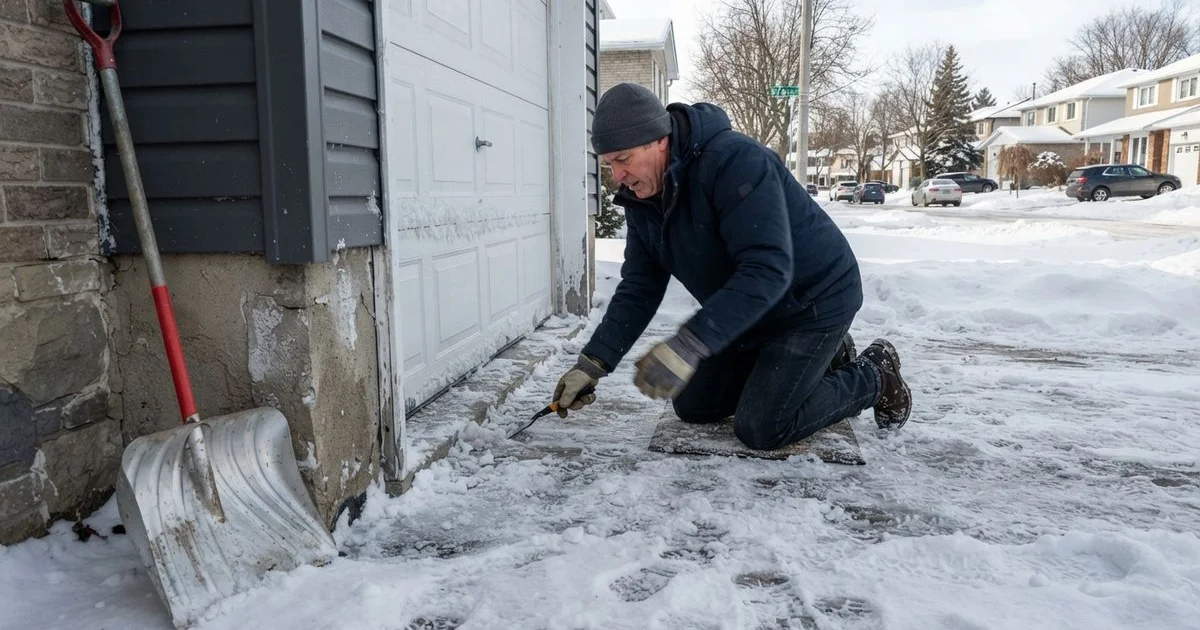
Ontario winters are hard on garage doors. Cold makes metal contract, lubricant thicken, and moisture freeze in exactly the spots that stop a door from moving smoothly. Most of what shows up as a winter “repair” call is actually a maintenance issue that a bit of prevention would have caught in the fall.
Why cold weather causes so many problems
Metal tracks and rollers contract slightly in extreme cold, which can turn a track that was fine in summer into one that binds in January. Standard petroleum-based lubricants also thicken as temperatures drop, adding resistance right when the opener motor needs to work hardest. On top of that, any moisture on the garage floor, from melting snow tracked in by a car, can freeze overnight and bond the bottom weatherstrip seal to the concrete.
The problems Ontario homeowners see most
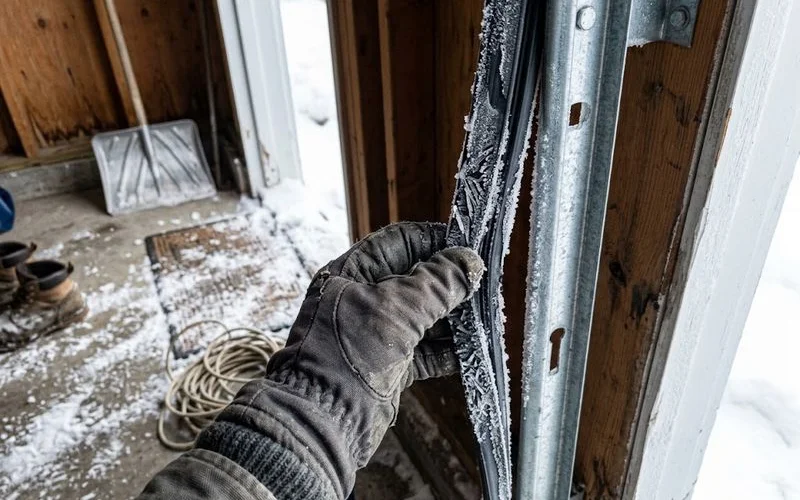
A door frozen shut at the bottom seal is the most common one. It looks like a mechanical failure but is almost always ice bonding the weatherstrip to the floor. Gently breaking the ice seal with a scraper, or warming it, solves this without forcing the door.
A sluggish, noisy door usually points to thickened lubricant on the rollers, hinges, and opener chain or belt. Switching to a lithium or silicone-based lubricant rated for cold temperatures before winter sets in prevents most of this.
A door that reverses or stops partway in cold weather often traces back to the safety sensors. Condensation or frost on the sensor lenses can interfere with the beam, so wiping them down is worth trying before assuming a bigger fault.
Contracted or misaligned tracks show up as a door that binds only in the coldest weeks of the year. If this happens every winter in the same spot, it is worth having a technician check the track alignment rather than living with it season after season.
A seasonal prevention checklist
| Task | When to do it | What it prevents |
|---|---|---|
| Apply cold-weather lubricant to rollers, hinges, chain | Early fall | Sluggish or noisy operation |
| Inspect and replace worn weatherstripping | Early fall | Freezing to the floor, drafts |
| Clear snow and ice buildup near the track | After every storm | Track binding, sensor obstruction |
| Wipe down safety sensor lenses | Monthly through winter | False stops or reversals |
| Check balance and listen for strain on the opener | Once mid-winter | Motor wear, premature opener failure |
When it is more than the cold
If a door has been properly maintained and still struggles, or if the problem appears suddenly rather than gradually worsening through the season, cold weather is probably not the root cause. A cracked panel, a spring nearing the end of its life, or an opener with a failing motor can all mimic winter symptoms. If lubrication, clearing ice, and cleaning the sensors do not fix it within a visit or two, it is worth having a technician take a look before the coldest part of the season, rather than waiting for a complete failure on the worst possible morning.
Why springs are more likely to fail in cold weather
Metal contracts in the cold, and a spring already near the end of its rated cycle count is more likely to snap during a cold snap than in mild weather, since the metal is under the same tension but slightly less flexible. If your door and opener are more than a decade old and you have not had the spring inspected recently, late fall is a good time to book that check before winter puts extra strain on aging hardware. If a spring does let go, our guide on DIY vs professional garage door installation explains why that particular repair is worth handing to a pro.
Building a fall maintenance habit
Most of the seasonal problems above trace back to the same handful of fall maintenance tasks getting skipped. Setting a yearly reminder for early fall, lubricate the hardware, check the weatherstrip, and have a technician glance at the spring and balance every few years, catches the vast majority of what would otherwise turn into a January service call.
Reviewers of Ontario garage door companies frequently mention responsive service during winter breakdowns as a differentiator, which is worth factoring in if you are choosing a company to call on short notice. See our garage doors and openers directory for Ontario providers ranked on real client feedback, using the process described on our methodology page. The homepage links to the rest of the directory if you need a different kind of garage work done.
FAQ
- Why does my garage door get slower or noisier in winter?
- Standard lubricant thickens in cold temperatures, which makes rollers, hinges, and the opener chain or belt work harder. A silicone-based, cold-weather lubricant applied before the temperature drops keeps things moving smoothly.
- What causes a garage door to freeze shut?
- Moisture on the floor or the bottom seal freezes and bonds the weatherstrip to the ground overnight. It is common after a day of melting snow followed by a hard freeze.
- Is it bad to force a frozen garage door open with the opener?
- Yes. Forcing it can strip the opener's drive gear or trigger the safety reversal system to think something is obstructing the door, and repeated force can bend the track. Free the ice first, then operate the door.
- Should I insulate my garage door for winter?
- It helps with temperature swings inside the garage and can reduce condensation that contributes to freezing, but it will not fix a misaligned track or worn seal. Insulation is a complement to good maintenance, not a substitute for it.