Garage door won't open? What to check before you call a repair pro
By Elena Whitfield · Updated 2026-08-12
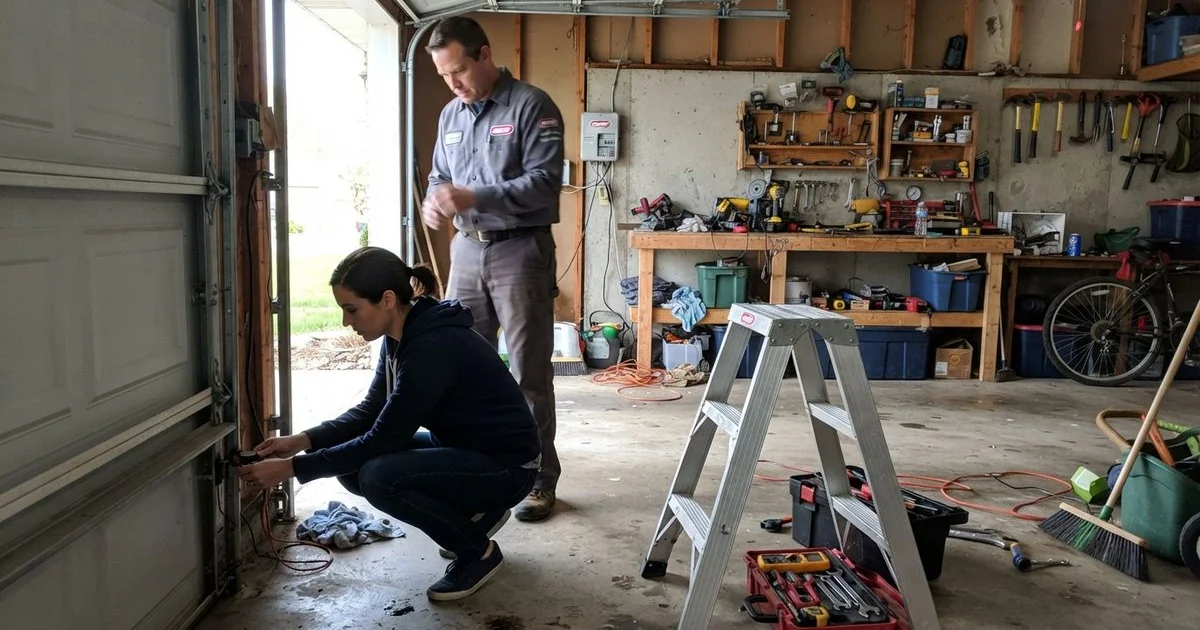
A garage door that will not open is one of the most common calls a builder or repair company gets, and most of the time the fix does not need a truck to show up. Before you book anyone, it helps to know which symptoms are minor and which ones mean stop touching it and call a professional.
Start with the safety basics
Never force a garage door that is stuck, and never work on a door with the spring still under tension. Torsion springs store enough energy to cause a serious injury, and that single warning is the reason most manufacturers tell owners to leave spring work to a trained technician. If the door will not lift by hand even with the opener disconnected, stop and treat it as a spring or cable problem.
With that out of the way, most stuck-door calls fall into a handful of repeatable causes.
The most common causes, in order of likelihood
- Sensor misalignment. The two small sensors near the floor on each track need a clear, straight line of sight. A shifted sensor, a spider web, or a stray box in the way will stop the door from closing and sometimes from opening too.
- Dead or weak remote batteries. Try the wall-mounted button first. If the wall button works and the remote does not, it is almost always the battery.
- Manual lock engaged. Some doors have a manual lock bar that gets bumped or engaged by accident, especially after a power outage.
- Track obstruction or misalignment. Debris in the track, a bent section, or rollers that have jumped the rail will bind the door partway through its travel.
- Broken spring or frayed cable. A heavy, stuck door with no partial movement is the strongest sign of this.
- Opener motor or logic board failure. Grinding, humming with no movement, or a light that blinks in a repeating pattern usually points here.
A quick self-check before you call anyone
| What you see | Likely cause | What to try first |
|---|---|---|
| Door won’t move, opener light blinks in a pattern | Sensor misalignment or obstruction | Wipe both sensor lenses, clear the path between them, realign if bent |
| Door opens partway, reverses | Sensor or track obstruction | Check for anything in the track or beam, inspect rollers |
| Door is heavy, won’t lift even by hand | Broken spring or cable | Stop. This is a professional repair, not a DIY job |
| Opener hums, door doesn’t move | Motor or drive gear failure | Disconnect the opener and test manual operation |
| Remote doesn’t work, wall button does | Dead batteries or unpaired remote | Replace batteries, reprogram if needed |
| Door frozen shut in cold weather | Ice on the weatherstrip or stiff hardware | Gently warm the seal, avoid forcing the door |
When it is worth calling a pro
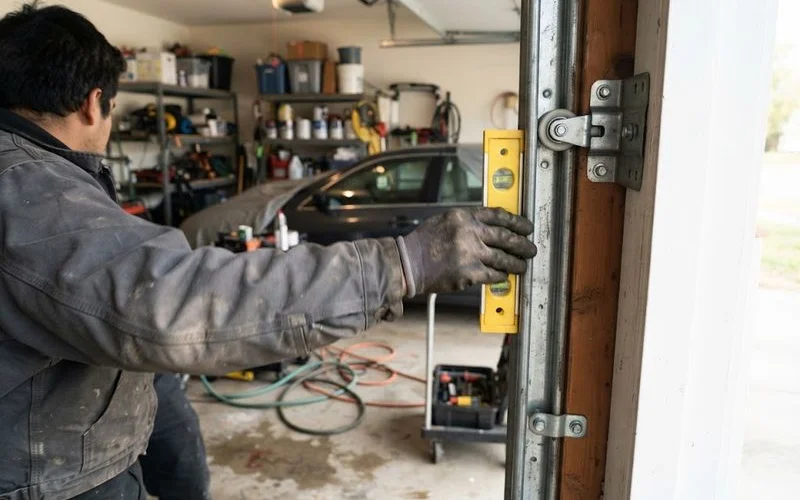
If you have checked sensors, batteries, and the manual lock and the door still will not move, or if it moves unevenly, drags on one side, or the spring looks stretched or separated, that is the point to bring in a technician rather than keep testing it. A misdiagnosed spring or cable repair is one of the more common sources of injury in home DIY, and it is also one of the fastest jobs for a trained tech, so the cost-to-risk trade rarely favours doing it yourself.
Ontario homeowners dealing with recurring winter issues should also budget for a seasonal tune-up. A yearly check of the springs, rollers, and weatherstripping catches wear before it turns into a Saturday-morning emergency.
What a good repair visit looks like
A technician worth hiring will test the door’s balance, inspect both springs and cables, check the opener’s force and limit settings, and lubricate the moving hardware, not just replace the one obviously broken part. Ask what the visit includes before they arrive so a simple sensor fix does not turn into an upsell on parts you do not need.
If you are comparing local companies, our garage doors and openers directory lists Ontario providers with review-based rankings, which is a useful starting point when a problem turns out to be more than a five-minute fix. For a broader look at how we score and rank every listing on the site, see our methodology, and the homepage has the full directory if your issue turns out to be a bigger build rather than a repair.
FAQ
- Why does my garage door open partway and then stop?
- This is usually the safety sensors near the bottom of the track sensing an obstruction, or a limit setting on the opener that is out of adjustment. Clean the sensor lenses and check nothing is blocking the beam before assuming a bigger fault.
- Is a garage door that won't budge at all always a spring problem?
- Often, yes. A door that will not lift even with the opener disconnected and feels heavy or stuck usually points to a broken torsion or extension spring. That is not a DIY fix; the spring is under high tension and can cause serious injury.
- Can cold weather stop a garage door from opening in Ontario?
- Yes. Stiff lubricant, a frozen weatherstrip seal, or an ice-jammed track are common in winter and can mimic a mechanical fault. Warming the space and gently freeing the seal solves it more often than people expect.
- How do I know if it's the opener or the door itself?
- Pull the manual release cord and try lifting the door by hand. If it moves smoothly, the opener or its wiring is the likely cause. If it is heavy, uneven, or will not move, treat it as a door or spring issue and stop trying to force it.